How Do Bees Make Honey? The Amazing Journey from Flower to Hive
At Huniwa, we believe that understanding the journey of honey helps us appreciate the incredible effort that goes into every drop. Let's explore how bees make honey, step by step.
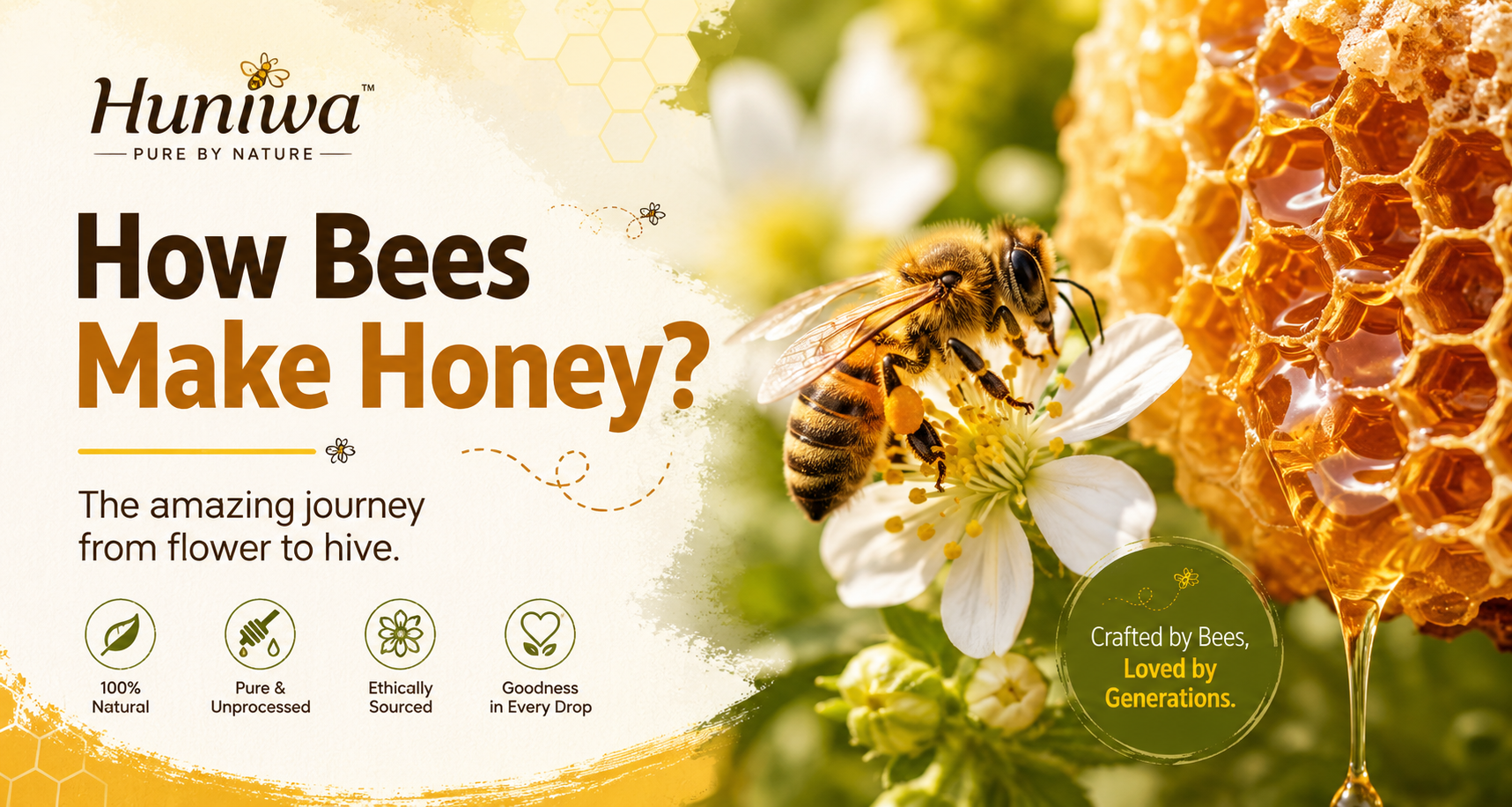
Honey is one of nature's most remarkable creations. Loved for its rich taste, natural sweetness, and wellness benefits, honey has been cherished by civilizations for thousands of years. But have you ever wondered how bees transform flower nectar into the golden honey we enjoy every day?
At Huniwa, we believe that understanding the journey of honey helps us appreciate the incredible effort that goes into every drop. Let's explore how bees make honey, step by step.
The Fascinating Process of Honey Production
Honey production is a complex and highly organized process involving thousands of hardworking honey bees. From collecting nectar to storing honey inside the hive, every bee plays an important role.
Step 1: Worker Bees Search for Nectar-Rich Flowers
The journey begins when female worker bees leave the hive in search of flowers that produce nectar. Nectar is a sweet liquid created by flowering plants and serves as the primary ingredient for honey.
This activity is known as foraging, and worker bees spend most of their lives gathering nectar and pollen for their colony.
Step 2: Bees Travel Long Distances
Honey bees can travel up to 5 miles (8 kilometers) from their hive while searching for nectar-rich flowers. Using the sun's position and their remarkable navigation skills, they efficiently locate the best food sources.
Step 3: Collecting Nectar from Flowers
Once a worker bee finds a suitable flower, it uses its long, tube-shaped tongue, known as a proboscis, to suck nectar from the flower's nectary.
The bee moves from flower to flower, collecting nectar while also helping plants reproduce through pollination.
Step 4: Nectar is Stored in a Special Honey Stomach
Instead of sending the nectar directly to its digestive stomach, the bee stores it in a separate organ called the honey stomach or honey sac.
This special storage pouch allows bees to transport nectar back to the hive while beginning the process of converting it into honey.
Step 5: Natural Enzymes Begin the Transformation
As nectar sits inside the honey stomach, enzymes produced by the bee start breaking down complex sugars into simpler sugars.
This important chemical transformation makes the nectar easier to digest and helps create the unique composition of honey.
Step 6: Returning to the Hive
Once the honey stomach is full, the worker bee returns to the hive carrying a load that can nearly equal its own body weight.
This remarkable feat highlights the extraordinary dedication and efficiency of honey bees.
Step 7: Passing Nectar to House Bees
Back at the hive, the worker bee transfers the collected nectar to younger bees known as house bees.
These bees continue processing the nectar by adding more enzymes and repeatedly passing it between one another.
Step 8: Converting Nectar into Honey
The added enzymes further break down sugars and reduce the nectar's water content.
At this stage, the liquid starts resembling honey, but it still contains too much moisture to be stored safely.
Step 9: Spreading Honey Across the Honeycomb
The house bees spread the partially processed honey into the hexagonal cells of the honeycomb.
By distributing the liquid over a larger surface area, bees help excess water evaporate more quickly.
Step 10: Bees Fan Their Wings to Remove Moisture
Fresh flower nectar contains approximately 70–80% water. However, mature honey typically contains less than 18% moisture.
To achieve this, thousands of bees work together by rapidly flapping their wings, creating airflow inside the hive. This natural ventilation system helps evaporate excess moisture and thickens the honey.
Step 11: Honey is Stored in Honeycomb Cells
Once the moisture level reaches the desired range, the honey is ready for storage.
The bees carefully place the finished honey into individual honeycomb cells where it will remain fresh for long periods.
Step 12: Sealing the Honey with Beeswax
To protect their valuable food supply, bees seal each honey-filled cell with a thin layer of beeswax.
This wax cap acts as a natural preservative, keeping the honey safe and uncontaminated until the colony needs it.
Why Do Bees Make Honey?
Honey serves as the primary food source for bees, especially during colder months when flowers are scarce. The stored honey provides the energy needed for the colony's survival throughout the year.
What we enjoy as a delicious natural sweetener is actually the result of months of hard work and teamwork by thousands of bees.
The Incredible Effort Behind Every Drop of Honey
Producing just one pound of honey requires bees to visit millions of flowers and fly thousands of miles. Every spoonful represents countless hours of foraging, nectar processing, moisture reduction, and storage.
This extraordinary process is one of nature's finest examples of cooperation and efficiency.
Experience Nature's Finest Honey with Huniwa
At Huniwa, we respect the incredible journey that transforms flower nectar into pure honey. Every jar reflects the dedication of hardworking honey bees and our commitment to delivering natural, high-quality honey to your family.
The next time you enjoy a spoonful of Huniwa honey, remember the remarkable journey it took—from blooming flowers to the hive and finally to your table.